
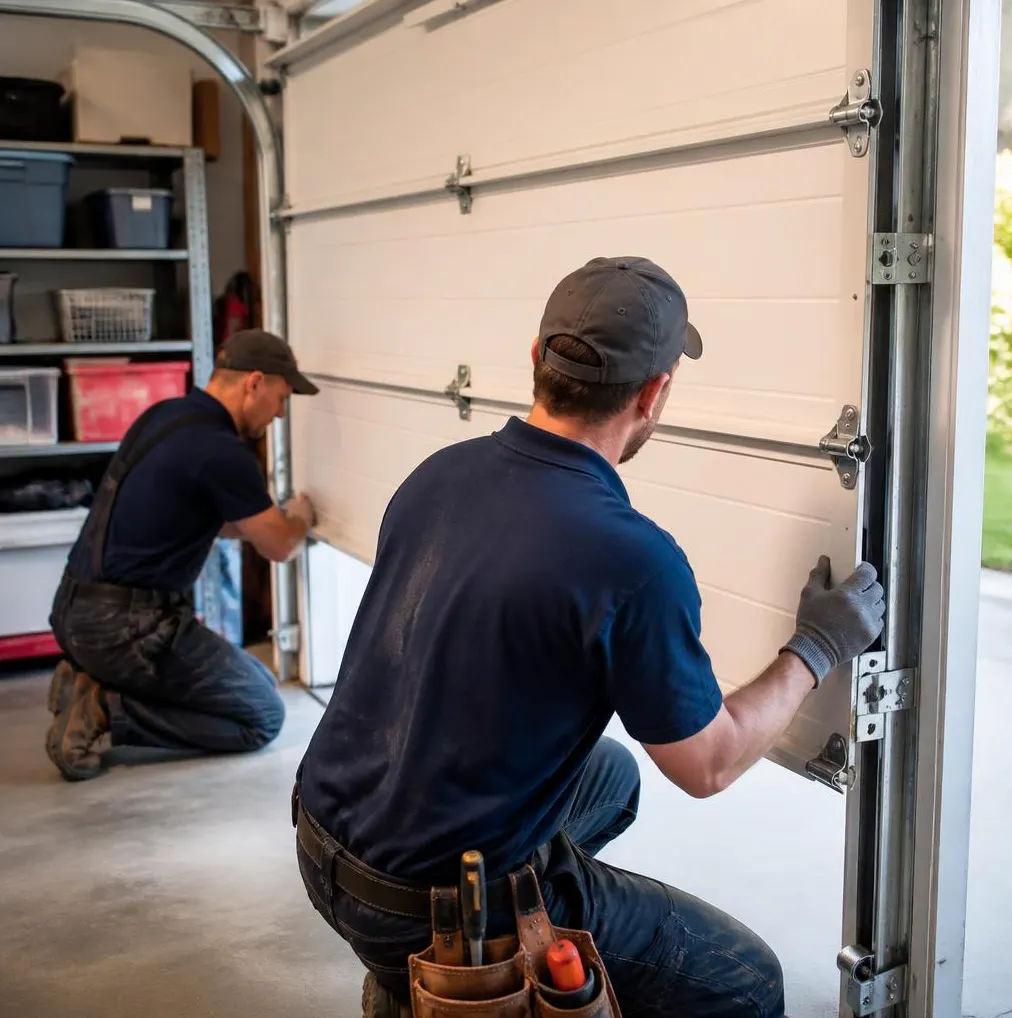
The Mistake: Treating a Shop or Warehouse Door Like a Big Garage Door
Here's the argument that starts it: one of you looks at the overhead door on the pole barn, metal shop, or small business building and says, "It's basically the same thing as the garage door on the house, just bigger." It's an easy conclusion to reach. The door has panels, tracks, springs, and an opener, same as the one you park your car behind every day. Same basic shape, same basic parts, so surely the same rules apply for maintenance, repair, and when to worry.
The problem is that "bigger" isn't the only difference, and treating a commercial-grade or warehouse door like an oversized residential door is how people end up with a spring that snaps without warning, an opener that burns out in a year, or a door that sags in the middle because nobody adjusted their expectations for how hard that door actually works.
What Actually Separates Commercial and Warehouse Doors from Residential Ones
The visible parts look similar, but the engineering underneath is built for a different job:
- Duty cycle: A residential door might open and close a handful of times a day. A shop or warehouse door tied to daily work, deliveries, or equipment can cycle dozens of times, which demands heavier-duty components rated for that wear.
- Spring systems: Wider, heavier doors often need multiple torsion springs or higher-tension springs just to lift the weight. More tension means more stored energy, and more danger if a spring fails without proper maintenance or a safety cable in place.
- Construction and gauge: Commercial doors are frequently built with heavier steel gauge, different panel reinforcement, and sometimes insulation specs suited for climate-controlled shop space, not just curb appeal.
- Opener horsepower: A residential belt or chain-drive opener isn't built to lift a wide, heavy commercial door reliably. Many of these setups use a jackshaft operator or a commercial-grade hoist designed for continuous use.
- Track and hardware weight: Heavier doors need heavier tracks, rollers, and hinges, or you'll see premature wear, misalignment, and sagging far sooner than you would on a standard residential setup.
Why the Mix-Up Happens
Both types of doors get sized up for wind load, both face the same humidity and salt air, and often the same company services both. That overlap makes it easy to assume the parts and the maintenance schedule are interchangeable. They're not. A spring sized for a 9-foot residential door isn't going to hold up on a 14-foot commercial door, no matter how similar they look from the driveway.
Maintenance Looks Different Too
Because commercial and warehouse doors work harder, they need more frequent attention, not the same twice-a-year checklist as a home garage door. Watch for:
- Sagging or bowing across the middle of a wide door, which signals the track or reinforcement isn't keeping up with the weight or cycle count.
- Grinding or chain slap from the opener, often a sign it's working past its rated duty cycle.
- Rust forming faster on hinges, tracks, and springs, especially with the humidity and salt air common along this part of the Gulf Coast.
- Uneven movement or one side dropping first, which points to spring or cable wear that's more urgent on a heavier door because of the added tension involved.
During hurricane season, this matters even more. Larger doors have more surface area catching wind, so wind-load-rated hardware and regular inspection of bracing aren't optional extras, they're what keeps the door from becoming a failure point during a storm.
When to Call Perry Garage Door Experts
If you've got a commercial or warehouse-style door on your property, whether it's a work shop, detached building, or small business space around Perry or Taylor County, it's worth having it looked at separately from your house door. Perry Garage Door Experts can handle a Garage Door Maintenance & Tune-Up built around how hard that specific door actually works, and if something's already sagging, grinding, or sticking, their Garage Door Spring Repair service covers the heavier-duty spring systems these doors rely on, done safely given the extra tension involved.
So, whoever's right about the argument, settle it with a second opinion. Call Perry Garage Door Experts for a straightforward inspection of your shop or warehouse door, before hurricane season or daily wear makes the decision for you.