
What a Forgotten Remote Costs You
Every hurricane season in Taylor County brings the same pattern: storm prep, evacuations, contractors in and out fixing storm damage, maybe a renter or house-sitter watching the place while you're gone. By the time November rolls around, it's common for three, four, even six old remotes to still be "learned" into a garage door opener that's never had its memory cleared. Add in a keypad with a four-digit code that hasn't changed since installation, and you've got a door that opens for anyone who ever had a reason to be near your house this year.
Ignoring this for another season doesn't just mean a security gap. Salt air and summer humidity are hard on keypad buttons and remote contacts, so a unit that's corroding quietly might fail at the worst moment — say, right before a storm when you need to get the car in fast. Reprogramming takes fifteen minutes. Finding out your opener won't respond during a tropical storm warning takes a lot longer to fix.
Tools You'll Need
- A step stool or short ladder (the motor unit and learn button are usually mounted on the garage ceiling)
- Your opener's model number (printed on the motor housing) or the owner's manual
- The remote(s) and/or keypad you want to program
- A small flathead screwdriver (for keypad battery covers and some older wall consoles)
- A notepad to track which remotes belong to which household member or vehicle
Step-by-Step: Reprogramming Remotes
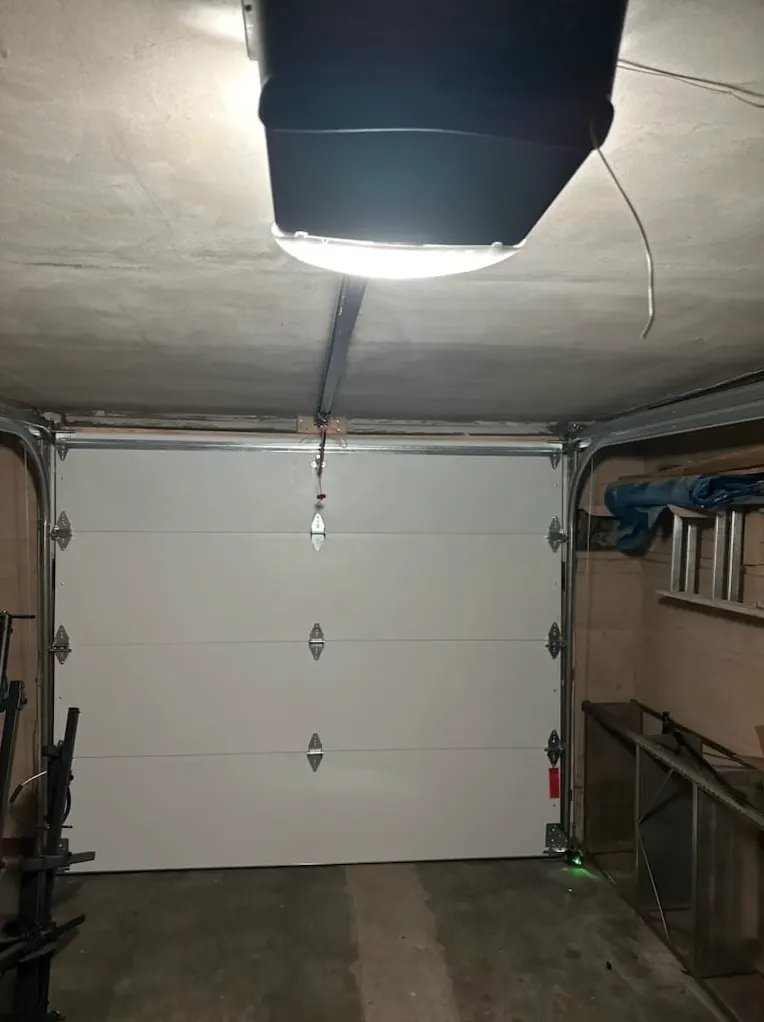
- Find the Learn button. On most openers made in the last 15-20 years, it's a small colored button (often purple, yellow, or green) on the back or side of the motor unit, near where the antenna wire comes out.
- Clear old codes first. Press and hold the Learn button until the indicator light turns off (usually 6-10 seconds). This wipes every remote and keypad code currently stored — which is exactly what you want after a lost remote or a season of unknown hands near your house.
- Enter programming mode. Press the Learn button once; the light will blink, giving you about 30 seconds to program a device.
- Program each remote. While the light blinks, press and hold the button on the remote you want to pair until the opener light flashes or you hear a click. Test it before moving to the next remote.
- Repeat for every remote and visor clicker you actually want to keep working, including any built into a vehicle's dashboard.
- Program the keypad. Enter programming mode again, then on the keypad enter a new PIN of your choosing followed by the Enter or Program button. Pick a code you haven't used on this keypad before.
- Test everything. Try each remote and the new keypad code from a few different spots — driveway, street, inside the car with the door up — to confirm range and reliability.
- Update any smart home app (like myQ or similar) if your opener connects to one, since clearing the Learn button doesn't always sync automatically with app-based access.
If a Remote Is Lost or Stolen
- Don't just try to delete one code — most residential openers can't remove a single remote from memory. Clear all codes using the Learn button method above.
- Reprogram every remote and vehicle clicker you still have, plus the keypad with a brand-new PIN.
- If the missing remote was in a car that's also missing (theft situation), change the keypad code immediately, even before you get to the remotes.
- Check for any paired garage access on a lost phone, since some smart openers link to phone-based apps rather than physical buttons.
What a Homeowner Can Handle vs. What Needs a Technician
The steps above cover the vast majority of remote and keypad situations, and most homeowners can do them with nothing more than a ladder and a few minutes. But there are a few signs it's time to call a technician instead of troubleshooting further:
- No Learn button, or it doesn't respond. Older systems with dip-switch style codes, or openers with a damaged control board, need a technician to diagnose.
- Keypad won't communicate at all, even after a fresh battery and a new code attempt. This is often a wiring or receiver issue, not a user error.
- Opener behaves oddly after a lightning strike or power surge — common after Taylor County storms. A fried circuit board can look like a programming problem but isn't fixable by resetting codes.
- Corrosion inside the keypad housing from humidity or salt air near the coast, causing intermittent failures rather than a clean on/off response.
When to Call Perry Garage Door Experts
If your opener won't enter programming mode, the keypad has stopped responding despite a fresh code and battery, or you suspect storm-related electrical damage, it's time for a technician rather than more trial and error. Our team handles this as part of standard Garage Door Opener Installation work and Garage Door Maintenance & Tune-Up visits, checking the receiver, wiring, and control board so the fix actually sticks instead of failing again next month.
If you're in Perry, Steinhatchee, Cross City, or anywhere else in Taylor County and your remotes or keypad aren't cooperating, give Perry Garage Door Experts a call — we'll get your access sorted out before winter guests start arriving.